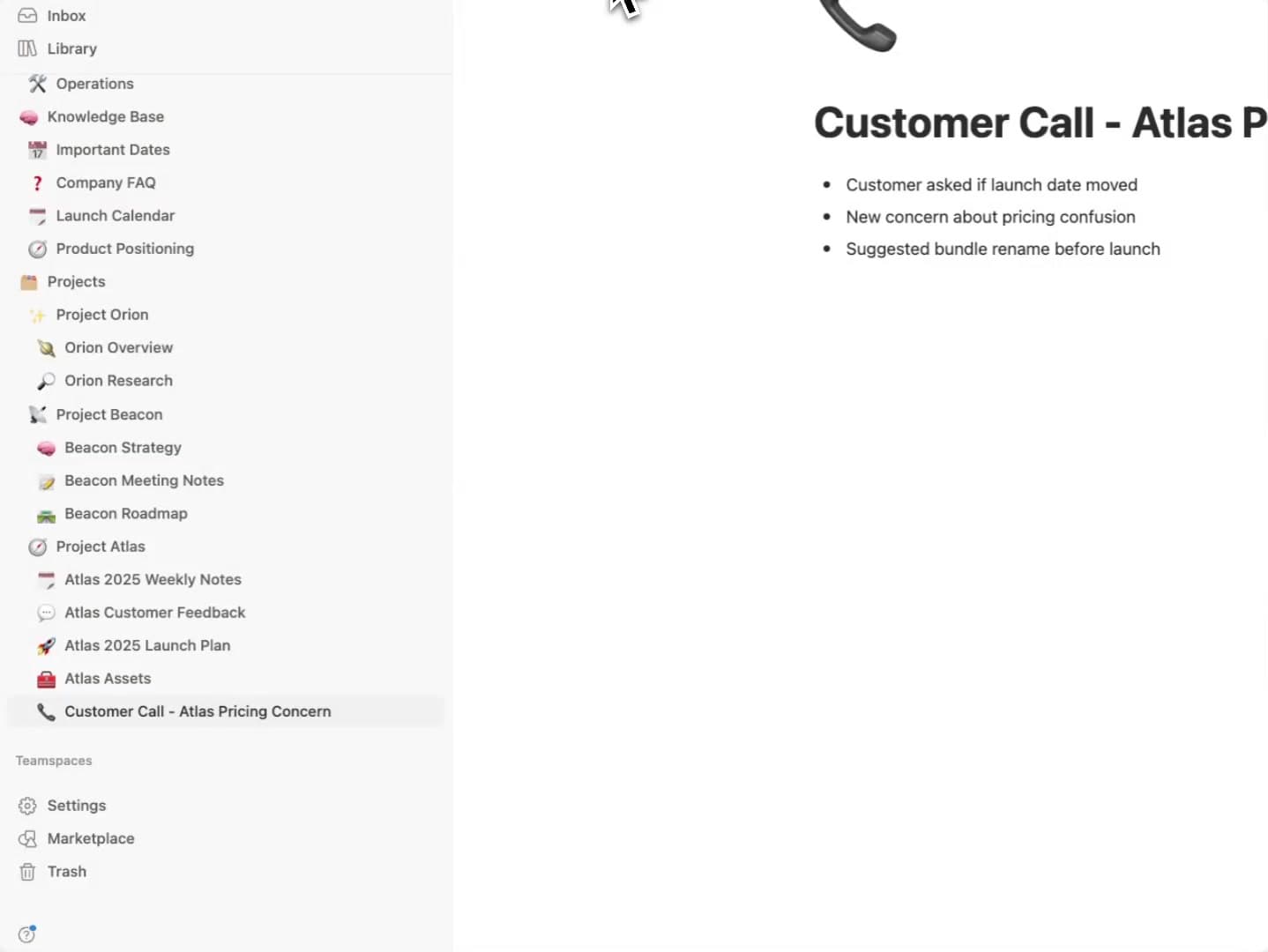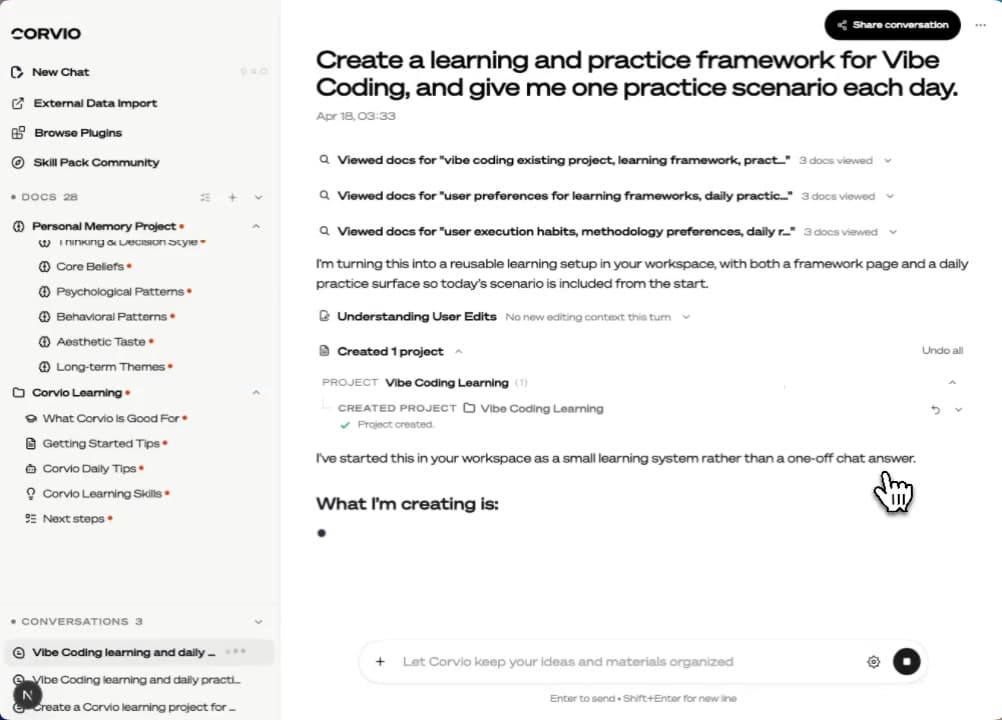
As documents grow, updates, revisions, categorization, and structure still depend on manual work. Related information gets duplicated across pages, structures drift, and keeping the system clear grows more costly over time.
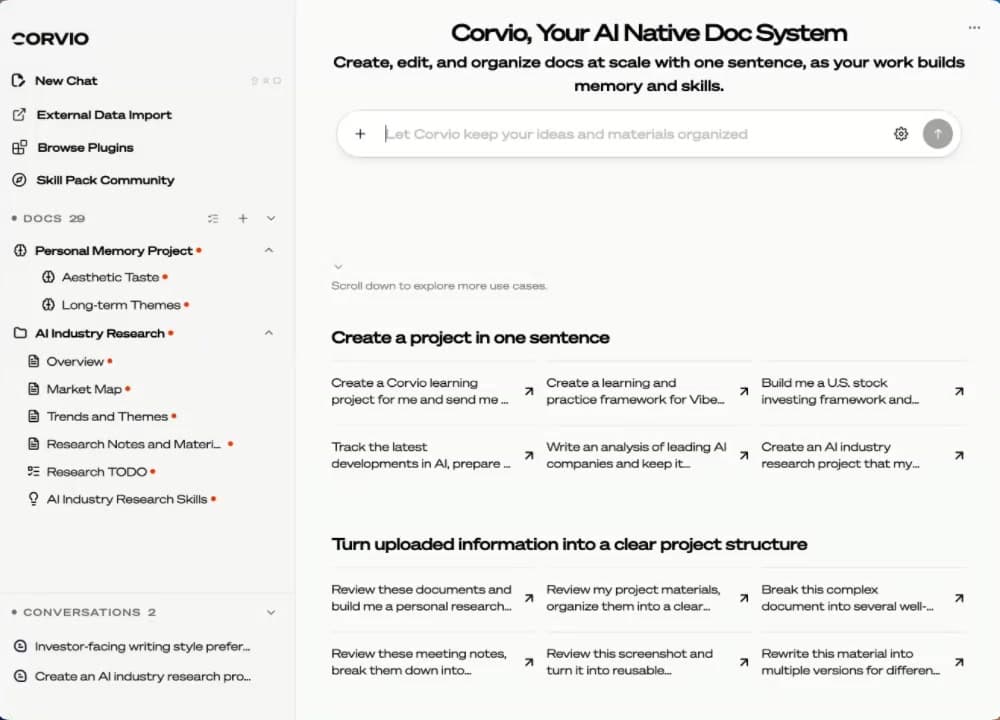
Your AI Native Doc System.
Create, edit, and organize docs at scale with one sentence, as your work builds memory and skills.
10x productivity — why is Corvio so much more effective than the way you work today?
Corvio can interpret your instructions and continuously reorganize, split, route, and update documents at scale. Related information stays structured, synchronized, and legible over time, reducing the long-term burden of document maintenance.
Even when you repeatedly revise tone, structure, emphasis, and detail, traditional tools do not retain those signals in reusable form. Each new task still begins without a durable understanding of how you prefer work to be written and refined.
Corvio can treat document content, edits, approvals, and corrections as durable signals. Over time, those signals become reusable memory and project skills, helping future work reflect your standards more consistently.
In most systems, memory and skills stay hidden inside prompts, settings, or opaque behaviors. They are hard to inspect, hard to edit together, and hard to evolve with a visible history of change.
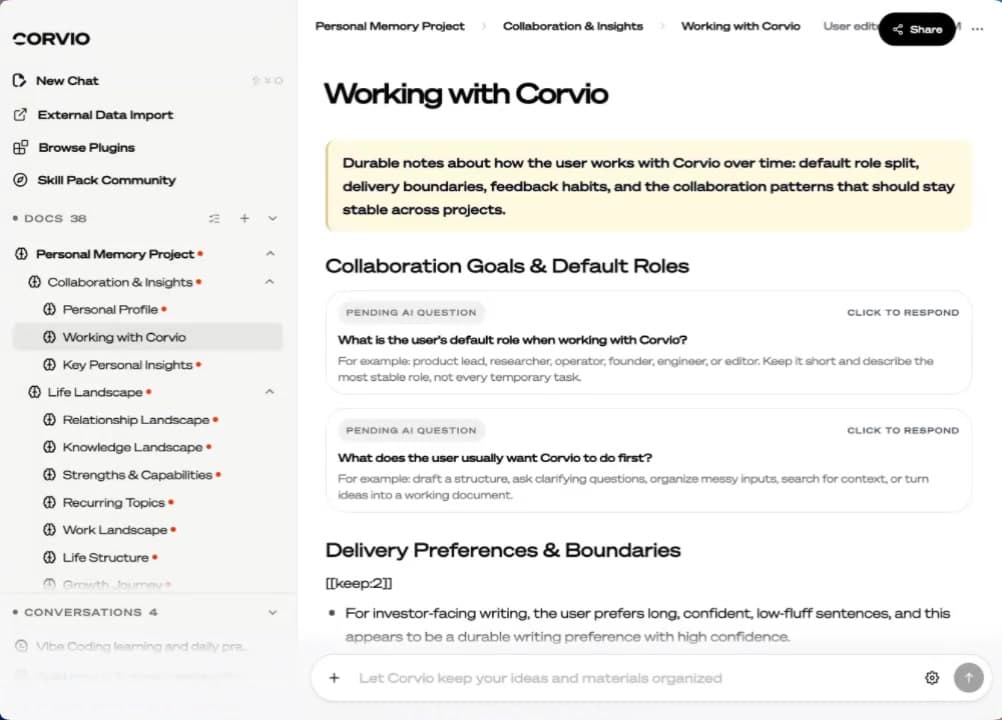
In Corvio, memory and skills appear as readable online docs rather than hidden system state. They can be reviewed, edited, co-created with AI, and iterated in a visible document workflow.
Knowledge and execution usually stay split across different tools. Context has to be restated manually, and agent outputs rarely return to the knowledge system in a durable, reusable form.
Corvio places agent work inside the same document structure where context already lives. Skills, task execution, outputs, and memory updates stay connected within one continuous system instead of being moved back and forth by hand.
For the future of teamwork, Corvio becomes core information infrastructure for high-performing AI-native teams
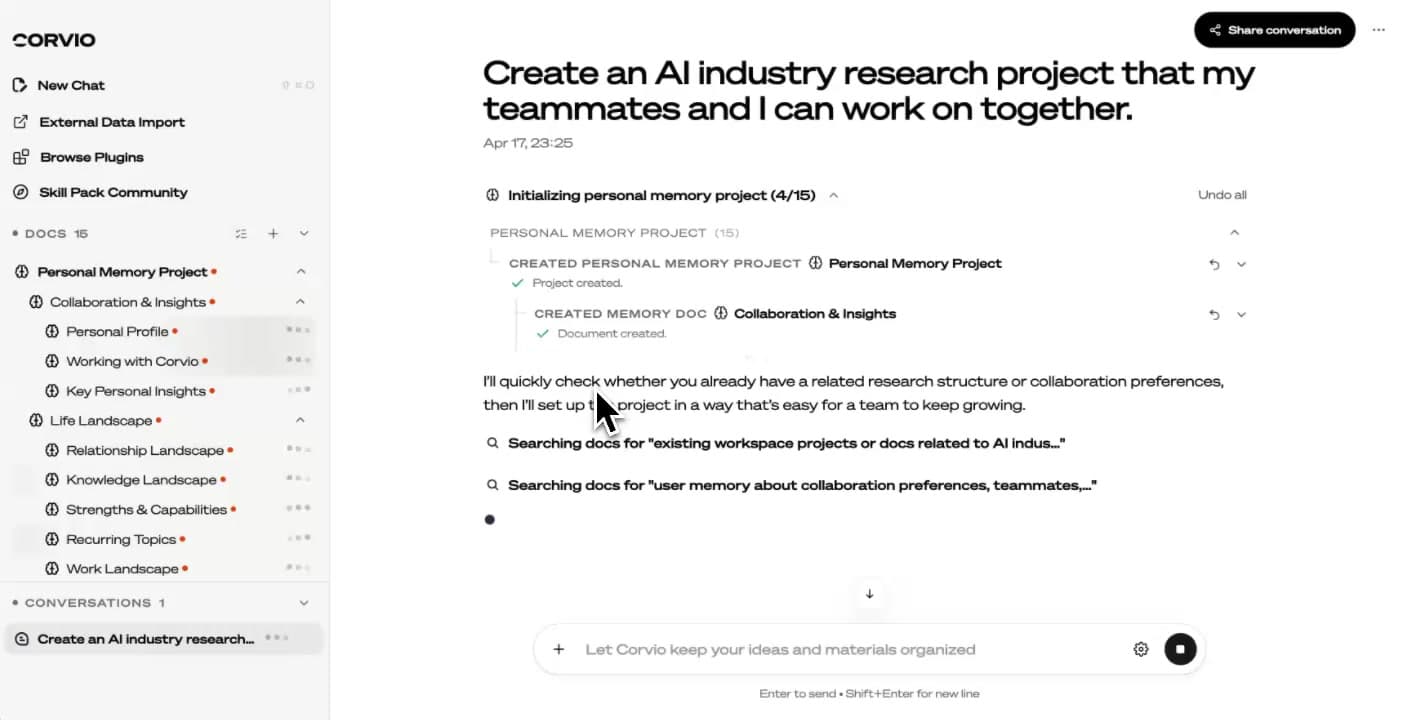
Multiple AI agents work inside one shared doc system
Different agents stop producing disconnected fragments and start contributing inside one visible structure.
In most tools, different AI agents end up working in separate threads, separate pages, or separate black boxes. One agent writes somewhere, another reorganizes somewhere else, and the team is left stitching the pieces back together by hand.
One living context system keeps everyone aligned
Project docs, memory, reusable skills, and active work stay connected so people and agents stop rebuilding the same background.
Teams lose a surprising amount of time repeating context. People explain the same project background in meetings, rewrite the same instructions in chat, and reframe the same goals every time work moves between tools. AI agents suffer even more because they often only see fragments.
Human judgment and AI execution stay connected
AI handles routine work first, surfaces uncertainty clearly, and leaves people to review only what actually needs judgment.
A useful AI system should not force humans to review everything. But it also should not act blindly when judgment is needed. The real challenge is knowing what AI should do on its own, what it should ask about, and what should remain clearly visible for review.
Your AI gets better by observing your real work
Real edits, preferences, and feedback accumulate into a system that understands you more deeply over time.
In the future, most knowledge workers will likely have their own AI assistant or agent. But a generic agent is not enough. The real value comes when that AI starts to understand how a person actually works: how they give instructions, what they care about, what kind of reporting they prefer, what “good” looks like to them, and where they tend to be strict or flexible.
Built for you and your agents to work together. Corvio is the best platform for long-term agent collaboration.
Execution speeds up because your agent is not starting from zero. Corvio helps your agent work with the context you have already built through real documents, edits, routines, and ongoing work. Instead of waiting for you to restate goals, structure, and constraints every time, it can begin with a much better sense of what matters and how the work should move.
That means less setup, less repeated explanation, and fewer false starts. For users, the value is immediate: tasks move sooner, AI becomes less interruptive, and execution feels more like momentum than management overhead.